

Image: Kibble Facts
The Return to Biological Design
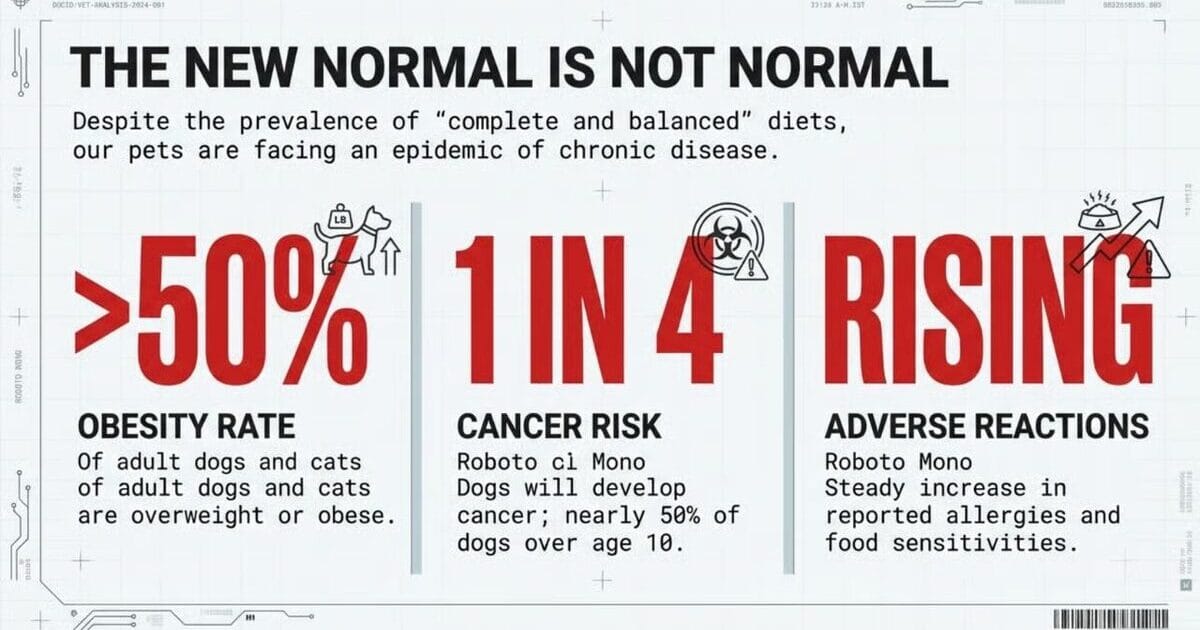
For decades, the standard for feeding companion animals has been built around industrial convenience: pour shelf-stable, dry pellets into a bowl. But as chronic disease rates climb, a growing number of owners are questioning the biological cost of convenience and returning to diets that align with the evolutionary anatomy of dogs and cats.
Raw pet food is not a modern trend; it is the biological baseline.
Unlike commercial kibble, which relies on high-heat processing and synthetic nutrient reconstruction, raw diets prioritize intact, species-appropriate nutrition. This article breaks down what a raw diet actually contains, the physiological benefits of removing thermal processing, and the factors that drive its cost structure.
Table of Contents
What is Raw Pet Food?
A biologically appropriate raw diet mimics the whole-prey nutrition that wild canids and felids have consumed for thousands of years. Instead of relying on rendered ingredients and carbohydrate binders, a true raw diet is constructed from intact animal tissues.
A complete raw diet consists of three primary components:
Muscle Meat: Provides high-quality, bioavailable amino acids that support lean muscle maintenance and metabolic function.
Organ Meats: The "multivitamins" of the natural world. Organs like the liver, kidney, and heart provide highly concentrated, food-bound essential micronutrients, including preformed Vitamin A, copper, and naturally occurring taurine.
Raw Bone: Supplies a perfectly balanced ratio of calcium and phosphorus, along with marrow fats and cartilage, without the use of isolated synthetic mineral salts.1
Because raw diets are not forced through the high-temperature kibble extrusion process, they have zero biological requirement for carbohydrates. They are naturally starch-free, eliminating the insulin-spiking glycemic loads found in dry commercial diets.
The Biological "Why": Physiology Over Processing

To understand why raw food is highly beneficial, we must look at the digestive physiology of dogs and cats. Both species possess short gastrointestinal tracts and highly acidic stomachs designed for the rapid digestion of raw animal protein and fat—not the prolonged fermentation of complex carbohydrates.2
When you feed a raw diet, you are feeding food in its natural matrix.
In industrial kibble manufacturing, temperatures commonly exceed 200°C. This extreme heat causes protein denaturation, destroys heat-sensitive vitamins, and triggers Maillard reactions that create Advanced Glycation End Products (AGEs), which are linked to oxidative stress and inflammation.
By eliminating the application of heat, raw diets preserve:
Endogenous Digestive Enzymes: Raw meat and organs contain natural enzymes that assist in digestion. When pets eat "enzyme-dead" extruded kibble, the entire digestive burden is shifted to the pancreas.
Complex Biological Matrices: Nutrients in raw food interact synergistically with natural cofactors, offering a stark contrast in bioavailability when comparing synthetic nutrients vs whole foods.
Moisture, Enzymes, and Nutrient Integrity
One of the most profound, yet overlooked, benefits of raw food is hydration.
A dog or cat’s natural prey is approximately 70% to 80% moisture. Commercial kibble is dried down to 6% to 10% moisture to prevent mold and ensure shelf-stability. This massive hydration gap forces kibble-fed pets into a state of chronic, low-grade dehydration, placing a continuous workload on the kidneys and urinary tract.
Raw food delivers water naturally at the time of feeding, flushing the renal system and supporting cellular health without relying heavily on voluntary water intake from a bowl. Furthermore, because raw diets are highly digestible and nutrient-dense, pets produce significantly smaller, firmer, and less odorous stools—a direct result of the body actually utilizing the food rather than passing indigestible carbohydrate fillers as waste.
Understanding the Cost Structure of Raw Food
The most common barrier to raw feeding is the price. Raw pet food is undeniably more expensive than commercial dry food, but understanding why requires looking at the economics of the pet food industry.
1. Ingredient Quality vs. Feed-Grade Fillers Commercial kibble is cheap because it relies on subsidized agricultural waste. The bulk of dry food is made from inexpensive carbohydrate binders (corn, wheat, peas, potatoes) and heavily processed meat meals. Raw food, conversely, relies on high-quality, human-grade muscle meats and organs. Meat is simply more expensive than starch.
2. The Absence of Extrusion Kibble factories are built for mass-production scalability. They output tons of uniform, shelf-stable pellets per hour. Raw food cannot be manufactured this way. It requires careful sourcing, precision grinding, and strict pathogen control, such as High-Pressure Processing (HPP), to ensure the food is safe for handling.3
3. Cold-Chain Logistics Because raw food does not use synthetic preservatives, it must be frozen to prevent spoilage. From the manufacturing facility to the transport trucks, to the pet store, to your home freezer, raw food requires a continuous "cold chain." Refrigeration and freezing logistics add massive overhead costs compared to bags of dry food that can sit in a hot warehouse for two years.
When evaluating the cost, many raw-feeding advocates view the diet as an investment in preventative health, potentially offsetting long-term veterinary bills associated with the health impacts of processed pet food, such as obesity, dental disease, and chronic inflammation.
Evaluating Raw vs. Commercial Kibble
The difference between raw food and commercial kibble is the difference between biological design and industrial engineering.
Commercial Kibble: Optimized for the manufacturer. It prioritizes shelf-life, cost-efficiency, and mass distribution at the expense of nutrient integrity and enzyme preservation.
Raw Pet Food: Optimized for the animal. It prioritizes species-appropriate nutrition, moisture, and high bioavailability at the expense of convenience and low cost.
Transitioning to a raw diet requires a commitment to proper handling and an understanding of your pet's true nutritional needs, but it remains the most direct way to bypass the biological stressors of the modern, ultra-processed pet food industry.
Citations & Sources
1 National Research Council (NRC). Nutrient Requirements of Dogs and Cats. National Academies Press.
2 Zoran, D.L. "The carnivore connection to nutrition in cats." Journal of the American Veterinary Medical Association (JAVMA). AVMA Journals.
3 Simonin, H. et al. "High-pressure processing of meat and meat products." Comprehensive Reviews in Food Science and Food Safety. PubMed.
