

Image: Kibble Facts
The comparison between raw pet food and commercial kibble is not merely a debate about ingredients; it is a fundamental contrast between biological design and industrial engineering. For thousands of years, the canine and feline digestive tracts evolved to process intact, moisture-rich animal tissues. In the 1950s, the pet food industry replaced this biological baseline with extruded, starch-bound pellets optimized for mass production and infinite shelf life.
Understanding the physiological differences between these two diets is critical for evaluating long-term health outcomes, nutrient bioavailability, and chronic disease risk in companion animals.
Table of Contents
The Engineering Constraint: Starch vs. Protein
The most defining difference between raw food and dry food is the structural requirement of carbohydrates.

Image: Kibble Facts
Commercial kibble is manufactured using the extrusion process, which forces ingredients through a high-pressure barrel at temperatures often exceeding 200°C. To allow the kibble pellet to expand and hold its shape without collapsing, a starch matrix is an absolute engineering requirement. Because of this, kibble typically contains 30% to 60% carbohydrates (corn, wheat, peas, or potatoes), regardless of whether it is marketed as "grain-free".

Image: Kibble Facts
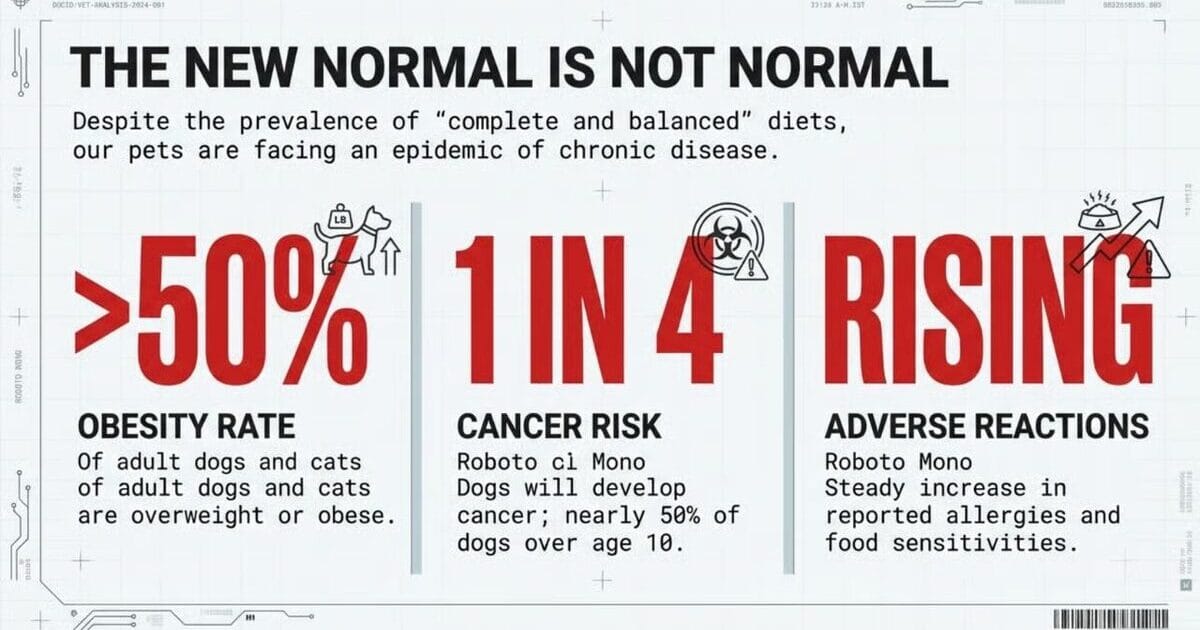
Dogs and cats, however, have zero biological requirement for carbohydrates. A raw diet is constructed from muscle meat, organs, and bone, completely bypassing the need for starch binders. This eliminates the chronic insulin spikes and metabolic stress that drive the current epidemic of pet obesity.
Processing Intensity and Nutrient Degradation
Kibble is an ultra-processed food. Before it even reaches the extruder, its primary protein sources (meat meals and by-products) undergo rendering—a high-heat process used to convert animal tissue into dry, stable powders. The mixture is then heated again during extrusion and baked dry.
This cumulative thermal exposure denatures proteins, triggers Maillard reactions (forming Advanced Glycation End Products, or AGEs), and destroys heat-sensitive vitamins. Raw food, by definition, avoids thermal degradation entirely, preserving the molecular integrity of amino acids and fatty acids.
The Hydration Gap: 10% vs. 70% Moisture

Image: Kibble Facts
A dog or cat’s natural prey consists of approximately 70% to 80% moisture. Raw diets naturally match this biological hydration level.
To maintain shelf stability and prevent mold, kibble is dried down to 6% to 10% moisture. This massive deficit forces dry-fed pets into a state of chronic, low-grade dehydration. Relying entirely on voluntary water intake from a bowl places continuous stress on the renal system and urinary tract, particularly in cats, which evolved to derive most of their moisture directly from their food.
Digestive Enzymes and Pancreatic Load

Image: Kibble Facts
Raw, unheated meat and organs contain endogenous enzymes that naturally assist in the breakdown of the food. Extrusion temperatures annihilate 100% of these natural enzymes, resulting in an "enzyme-dead" product.
When a dog or cat eats kibble, the entire burden of digestion shifts to their pancreas, which must overproduce enzymes to break down the processed, starchy material. Over a lifetime, this unseen metabolic strain is theorized to contribute to pancreatic stress, malabsorption, and inflammatory conditions.
Reconstruction vs. Intact Nutrition

Image: Kibble Facts
Because the high heat of kibble manufacturing destroys vitamins and minerals, dry food must be synthetically fortified with chemical premixes to meet AAFCO minimum standards. These isolated synthetic nutrients lack the complex biological matrices and co-factors found in whole foods, fundamentally altering their absorption and utilization in the body.
Raw diets deliver preformed, highly bioavailable nutrients exactly as nature intended—from intact liver, heart, muscle, and bone—providing structural nutrition rather than a synthetic reconstruction.
Citations & Sources
1. National Research Council. Nutrient Requirements of Dogs and Cats. National Academies Press.
2. Riaz, M.N. Extrusion Processing Technology. CRC Press.
3. Zoran, D.L. "The carnivore connection to nutrition in cats." Journal of the American Veterinary Medical Association.
4. Friedman, M. "Protein damage during food processing." Journal of Nutrition.
