

Credit: Kibble Facts
The Economics of Pet Nutrition
The most common barrier pet owners face when transitioning away from ultra-processed diets is "sticker shock." A bag of commercial kibble is undeniably cheaper than a month’s supply of premium raw or fresh food. However, this price gap is not arbitrary; it is a direct reflection of ingredient quality, manufacturing methods, and logistical infrastructure.
To understand why raw and fresh diets cost more, we must forensically examine the industrial economics of the pet food supply chain and the biological cost of feeding cheap, highly processed foods over a pet's lifetime.
Table of Contents
The Kibble Economy: Engineered for Margins
Commercial kibble was invented in the 1950s not to optimize canine and feline health, but to create a profitable outlet for surplus agricultural grains and slaughterhouse waste.
Kibble is cheap because it is an industrial engineering triumph. Manufacturers use feed-grade rendered meats (which cost pennies on the dollar compared to fresh meat) and bind them with subsidized agricultural starches like corn, wheat, and peas. Because the extrusion process creates a dry, shelf-stable pellet, manufacturers have zero refrigeration costs. A bag of kibble can sit in a hot warehouse for two years, dramatically lowering storage, shipping, and distribution overhead.
The Cost of Intact Protein vs. Rendered Waste
When you purchase a raw or fresh-cooked diet, the bulk of your money is paying for actual meat.
True raw diets prioritize intact skeletal muscle, high-quality organ meats (liver, heart, kidney), and finely ground bone. These ingredients often compete directly with the human food supply chain. Meat is exponentially more expensive to source than the rendered meat-and-bone meals and carbohydrate fillers that make up the vast majority of dry pet food.
Manufacturing: Extrusion vs. Cold-Chain Logistics
The largest driver of cost in the raw and fresh pet food space is the supply chain.
Because raw diets lack the harsh synthetic preservatives (like BHA, BHT, or ethoxyquin) used in kibble, they rely on temperature control to prevent spoilage. From the moment the food is mixed, it must be frozen or refrigerated.
• Pathogen Control: High-quality raw food often undergoes High-Pressure Processing (HPP), a costly, cold-water pasteurization method that eliminates bacteria without applying heat.
• The Cold Chain: Shipping frozen food requires insulated packaging, dry ice, refrigerated transport trucks, and expensive freezer space at retail locations.
Fresh Cooked vs. Raw: Processing Differences
The modern "fresh pet food" category (gently cooked meals delivered to your door) bridges the gap between kibble and raw. While fresh food avoids the extreme heat of extrusion and the rendering process, it is still lightly cooked to eliminate pathogens. This alters the enzymatic activity and denatures some proteins, but the ingredient quality remains vastly superior to kibble.1 The cost structure of fresh-cooked is very similar to raw, as it also utilizes high-quality meats and requires strict cold-chain refrigeration logistics.
When evaluating the cost of raw or fresh diets, pet owners must shift their perspective from the daily cost of feeding to the lifetime cost of ownership.
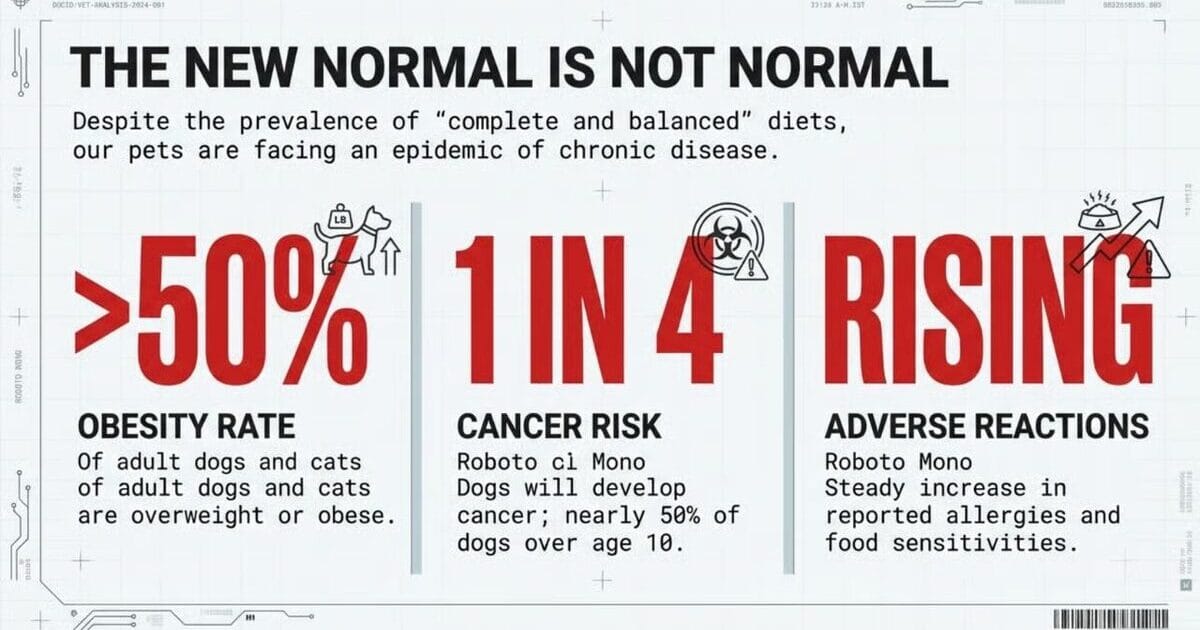
Ultra-processed kibble may save money at the checkout counter, but the biological toll is extracted later.2 High-carbohydrate, low-moisture, heavily processed diets are documented drivers of the chronic diseases plaguing modern pets. The savings on a bag of kibble are easily wiped out by the veterinary costs associated with managing kibble-induced obesity, chronic dental disease (requiring extractions under anesthesia), diabetes management, and systemic inflammation.
A raw diet is an upfront investment in your pet's biological baseline. It prioritizes preventative health through intact, species-appropriate nutrition.3
Citations & Sources
1 Freeman et al. "Evolution of companion animal nutrition." Journal of the American Veterinary Medical Association (JAVMA).
2 Meeker, D.L. & Hamilton, C.R. "An overview of the rendering industry." Journal of Animal Science.
3 Simonin, H. et al. "High-pressure processing of meat and meat products." Comprehensive Reviews in Food Science and Food Safety.
